
Interview with Mr. Dániel Csonka
Embassy of Hungary to The Netherlands
Questions and Answers
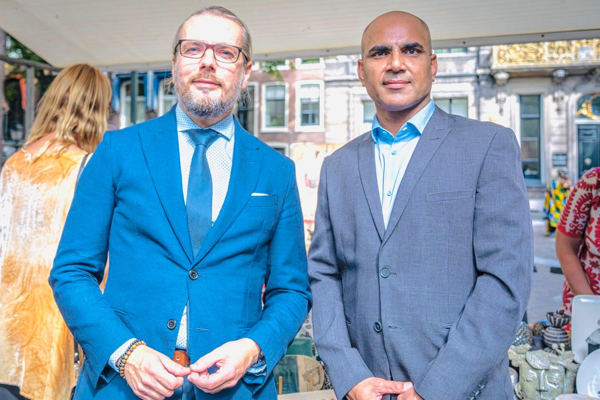
We are delighted to present an insightful interview conducted by Mr. Akmal Nazir, the Founder of Diplomat Link, with Mr. Dániel Csonka, Chargé d’Affaires at the Hungarian Embassy in the Netherlands. The interview took place at the Embassy Festival and provided an opportunity to discuss important topics, perspectives, and insights. We are pleased to share the full interview below and would greatly appreciate hearing your thoughts and feedback. Please read the interview and share your comments by emailing the address provided below.
Q. How do you see the current state of economic and trade relations between Hungary and the Netherlands?
Ans. The economic relationship between Hungary and the Netherlands is substantial and diversified, with a growing focus on higher-value cooperation. The Netherlands stands as one of Hungary's key trading partners. In 2025, Hungarian exports to the Netherlands amounted to about €5.17 billion, marking a 2.4% increase, while Dutch exports to Hungary count around €6.83 billion, collectively representing 4.2% of Hungary's total goods trade. The Netherlands plays a significant role as an investor in Hungary, which itself is developing a more international business presence with investments in the Dutch market.
It's encouraging that our collaboration extends beyond traditional trade. Dutch companies in Hungary engage in sectors like agriculture, food processing, chemicals, manufacturing, healthcare, lighting, insurance, logistics and electronics. Meanwhile, Hungarian companies view the Netherlands as a gateway to Western European markets and as a partner in innovation and international expansion.
Q. With over 500 Dutch companies in Hungary employing more than 20,000 people, which sectors offer the greatest potential for increased trade and investment?
Ans. Indeed, more than 500 Dutch companies operating in Hungary – ranging from industry giants like Heineken, NN Group, KLM, and Aalberts, to dynamic small and medium-sized family businesses. While the above-mentioned sectors remain the backbone of our trade, several promising areas stand out. Agriculture and food are particularly notable; the Netherlands excels in horticulture, precision agriculture, agricultural technology, logistics, and food processing. Hungary complements this with substantial agricultural resources and a strong tradition in high-quality food and wine production.
Another promising area is water management and environmental technology. Hungary has significant expertise in water technologies, while Dutch entities are well-versed in water management, climate adaptation, and circular water practices. The internationalization of Hungarian water-industry expertise was recently showcased at Amsterdam's Aquatech Expo in 2025.
Moreover, smart mobility, automotive technology, logistics, and digitalization hold significant potential. The Smart Mobility Roadshow in Eindhoven and Helmond in October 2025 highlighted this by bringing Hungarian innovators together with Dutch companies focused on smart cities, mobility solutions, e-mobility, and testing technologies. We also see massive potential in life sciences and biotechnology, alongside R&D collaboration between Dutch hubs and Hungarian universities. Furthermore, strong opportunities exist in IT, software development, joint digital solutions, and cybersecurity initiatives.
Additionally, there’s substantial potential in promoting Hungarian wine and premium food. Hungary's diverse wine regions offer distinct varieties appreciated by sophisticated Dutch consumers who value provenance, sustainability, and authenticity.
Q. What opportunities exist for Dutch and Hungarian businesses to enhance cooperation in innovation, technology, sustainability, and agriculture?
Ans. As you highlighted before, there are over 500 Dutch companies active in Hungary. This presents a significant opportunity to combine Dutch technological and commercial skills with Hungarian engineering, scientific expertise, and entrepreneurial drive. There are already thriving partnerships; for example, a Hungarian agricultural delegation traveled to Wageningen in January 2026 to investigate sustainable food systems, climate-resilient agriculture, precision farming, bio-economy, and algae-based innovations.
This could evolve into practical collaborations in agricultural robotics, greenhouse technology, water-efficient farming, soil management, food waste reduction, and the circular bio-economy.
Innovation serves as another vital link. The Netherlands boasts a highly developed innovation ecosystem, while Hungary is home to a flourishing community of tech companies and startups. Past collaborations have already connected Hungarian ICT startups with Dutch investors and firms. The more recent smart-mobility program demonstrates how these connections can be transformed into specific sector partnerships.
I envision more joint pilot and demonstrator projects, beyond just conference interactions. For instance, a Dutch-Hungarian collaboration might develop and test a water-saving agricultural technology in Hungary, implement a smart-mobility solution in a Dutch city, or create a circular food production model with potential for international commercialization.
Q. How important are cultural exchanges in strengthening the relationship between Hungary and the Netherlands?
Ans. Cultural exchanges are crucial in strengthening the relationship between Hungary and the Netherlands because economic ties ultimately rely on people knowing and trusting each other. Hungarian-Dutch relations have a rich historical foundation. Hungarian students have been attending Dutch universities for centuries, and these exchanges foster relationships that can evolve into educational, scientific, tourism, and business cooperation.
Today’s cultural diplomacy should also showcase contemporary Hungary to Dutch audiences by introducing them to its young musicians, designers, filmmakers, scientists, entrepreneurs, or winemakers. Recent events have highlighted the effectiveness of this approach. Hungarian musicians have participated in the Huygens Festival in Voorburg and young talents have appeared at the International Holland Music Sessions. To foster cultural exchange, in the coming months, our Embassy is organizing classical concerts, scientific and language workshops, art, architecture and design exhibitions, culinary events and Hungarian wine-tasting just to name a few.
Q. What aspects of Hungarian culture do you think Dutch audiences should discover or experience more?
Ans. Regarding Hungarian culture, I encourage Dutch audiences to explore beyond Budapest and appreciate the diversity of Hungary's regions and contemporary culture. While many Dutch people know Hungary as a summer holiday destination, there is so much deeper culture to discover. Beyond our thermal bath culture and world-famous wine regions like Tokaj and Villány, we want Dutch audiences to experience our rich classical and modern music scene, vibrant contemporary visual arts, and our inventive, modern gastronomy. Wine experiences should be paired with Hungarian gastronomy by trying everything from traditional dishes to innovative takes by a new generation of chefs using local ingredients. The Budapest Wine Festival attracted over 29,000 visitors during its 35th edition in September 2026, showcasing Hungary's strong wine culture.
Music and the arts hold significant importance in Hungary. While the legacy of figures like Liszt and Bartók is foundational, Hungarian musical culture extends far beyond them. The country boasts a vibrant contemporary scene, along with deep-rooted traditions in classical music, folk music, dance, design, and craftsmanship.
Hungary is also a hub of scientific and literary creativity – a country with 16 Nobel laureates – so our culture of innovation is something we are equally proud to share. Novels by László Krasznahorkai, our most recent Nobel laureate or the late Péter Nádas and Péter Esterházy are well known by the Dutch readers, thanks to the excellent translations.
We also share a wealth of common history. This year, we commemorate the 70th anniversary of Hungary’s 1956 Revolution and Freedom Fight revolution against communist oppression. Following the revolution that had been crushed by the Soviet intervention, the Netherlands welcomed Hungarian refugees, who quickly became valued members of Dutch society. I In cooperation with the Municipality of The Hague and our partners, this October we will organize a commemorative event dedicated to the revolutionaries and the Dutch solidarity. I could also mention that after World War I, Dutch families welcomed thousands of Hungarian children into their homes to help them recover during those difficult times. This year, we are celebrating the centenary of the arrival of the 100th 'children’s train' (Kindertreinen) together with our Dutch and Hungarian partners.
Q. How do events such as the Embassy Festival contribute to bringing Hungarians and Dutch people closer together?
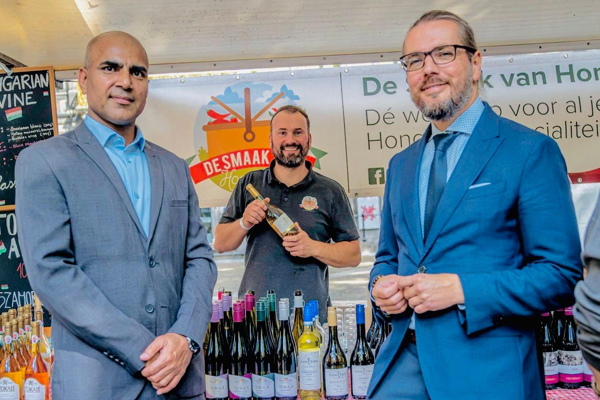
Ans. Events like the Embassy Festival play a crucial role in strengthening bonds between Hungarians and Dutch people by transforming international relations into personal, informal, and accessible experiences. The event features nearly 50 cultures through music, food, crafts, and cultural activities. Hungary's presence at the International Market showcased Hungarian food, wines and handicrafts.
For those unfamiliar with Hungary, experiencing its wine, lángos, kürtőskalács (chimney cake) or craftsmanship may ignite curiosity about the country. This highlights the true value of cultural events: they foster connections before providing explanations. Someone introduced to Hungary through its culture may later become a tourist, student, customer, business partner, or simply a friend of the nation. Therefore, it's important to continue investing in these accessible formats that emphasize people-to-people interactions.
Q. Looking ahead, what would you like to see develop further in the relationship between Hungary and the Netherlands, both economically and culturally?
Ans. There is already a robust foundation. Bilateral trade between Hungary and the Netherlands has grown significantly over the past decade, backed by substantial Dutch investment in Hungary. Recent initiatives in smart mobility, water technology, and sustainable agriculture demonstrate an evolving technological sophistication in cooperation.
Visibility of Hungarian products in the Netherlands like wine, premium food, design, and creative goods is a priority. At the same time, Dutch expertise and technology have ample opportunities in Hungary.
Culturally, more collaborative programs involving young people, universities, musicians, designers, filmmakers, and cultural institutions are encouraged. Opportunities should be crafted not just to showcase Hungarian culture in the Netherlands or vice versa but to create joint projects.
There are already excellent platforms for this synergy. In Hungary, events such as the Budapest Wine Festival, AGROmashEXPO, and ENVIRONTEC offer chances for Dutch businesses to engage with Hungarian companies and innovations. In the Netherlands, events like the Embassy Festival and the Huygens Festival allow Hungarian culture to connect with Dutch audiences.
Ultimately, the relationship should focus not just on trade but on what Hungary and the Netherlands can co-create. This requires fostering innovation, investment, cultural exchange, and direct connections between their people, businesses, universities, and creative communities, while ensuring that both countries remain forward-looking, constructive partners in addressing common European challenges.
Please leave your valuable feedback at info@diplomatlink.com
Thank you for your support and valuable feedback!