Interview with H.E. Vusi Madonsela
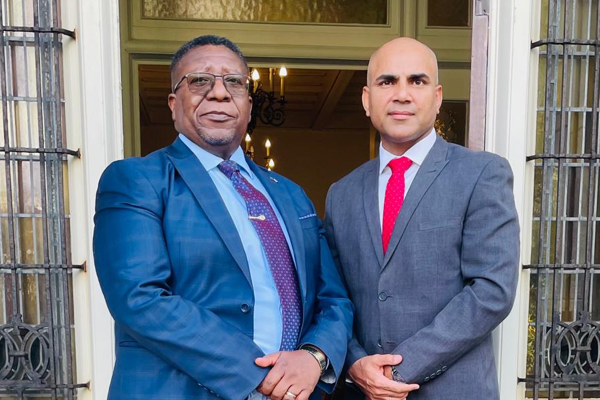
Ambassador of South Africa to The Netherlands
Questions and Answers
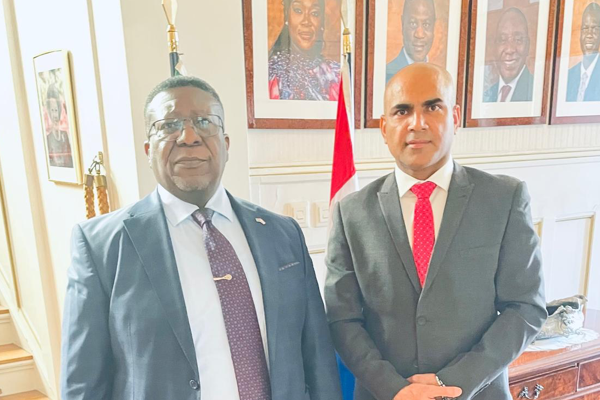
We are thrilled to share an engaging interview conducted by Mr. Akmal Nazir, Founder of Diplomat Link, with H.E. Vusi Madonsela, the Ambassador of the Republic of South Africa to the Kingdom of the Netherlands. This enlightening conversation, hosted at the ambassador's residence in The Hague, offered a valuable chance to delve into a variety of important topics, perspectives, and insights, emphasizing the robust diplomatic and cultural ties between South Africa and the Netherlands. We invite you to enjoy the full interview below and welcome your thoughts, reflections, and feedback.
Q. How would Your Excellency assess the current state of trade and economic relations between South Africa and the Netherlands, and where do you see the greatest opportunities for further growth?
Ans. South Africa and the Netherlands enjoy extraordinarily strong and cordial bilateral relations governed by means of a Joint Commission for Cooperation (JCC), co-chaired by the respective Ministers responsible for Foreign Affairs and International Relations & Cooperation. I can state here, without any fear of equivocation, that the state of trade and economic relations between our two countries is solid and currently at an all-time high following the working visit by former Prime Minister Mark Rutte in June 2023 and the State Visit by the Royal Couple in October 2023. The bilateral partnership between our two nations is overall so strong they can weather the storms of the current global economic uncertainties. Here are some key indicators of the state of the relationship:
- Trade Balance: In March 2026, the Netherlands exported 295M euros and imported 170M euros from South Africa, resulting in a positive trade balance of 125M euros. It is noteworthy to mention that the trade balance keeps moving forth and back between the two countries due to changing currency valuation and state of the global economy.
- Top Exports: The top exports of the Netherlands to South Africa include petroleum, petroleum products and related materials, office machines and automatic data processing machines, and chemical materials and products.
- Top Imports: The main imports of the Netherlands from South Africa are vegetables and fruits, coal, and briquettes.
- Trade Volume: The total trade volume between the Netherlands and South Africa reached 584B euros in 2023, indicating substantial economic integration.
- Joint Commission of Cooperation: The Netherlands and South Africa signed a Memorandum of Understanding on the Establishment of a Joint Commission of Cooperation (JCC) on 19 November 2015, providing for regular meetings to facilitate consultation and cooperation in various fields.
These points highlight the robust economic and trade relationship between South Africa and the Netherlands, with both countries engaging in a range of sectors and maintaining a positive trade balance.
Q. The Netherlands is an important gateway to Europe for South African agricultural and horticultural products. How can South Africa and the Netherlands further strengthen cooperation in agriculture, horticulture, cold-chain logistics and food processing while increasing value addition for South African producers?
Ans. From South Africa’s perspective, cooperation with the Netherlands should increasingly focus on strengthening South Africa’s competitiveness and ensuring that South Africa retains a greater share of agricultural value.
There has already been substantial progress: the Bilateral Committee on Agriculture has been active, since October 2024 meeting in Tzaneen, addressing issues such as cool- logistics, e-certification, climate-smart agriculture, phytosanitary and veterinary matters, and biodiversity.
In May 2025, the two governments also finalised a framework between South Africa’s National Treasury and Invest International covering agri-food and sustainable value chains, renewable energy, water management, and climate-resilient infrastructure. This provides a strong platform for South Africa to seek greater Dutch investment.
Q. Which sectors of the South African economy currently offer the most promising opportunities for Dutch companies and investors, and what would Your Excellency like Dutch businesses to know about South Africa’s investment environment?
Ans. From South Africa’s perspective, the most promising opportunities for Dutch companies and investors are in agriculture and agro-processing, renewable energy and green hydrogen, water infrastructure, logistics and ports, digital infrastructure, advanced manufacturing, mining and critical-minerals beneficiation, and healthcare and life sciences. These sectors match Dutch strengths in technology, innovation, infrastructure and sustainable value chains with South Africa’s resources, industrial capabilities, and position as a gateway to the wider African market.
There is already a strong investment foundation: the Netherlands was one of South Africa’s largest sources of foreign direct investment, accounting for 17.7% of total FDI at the end of 2023, while bilateral cooperation is expanding into hydrogen, renewable energy, critical raw materials and sustainable value chains. South Africa would like Dutch businesses to see the country as a long-term investment and production partner rather than simply an export market—one that offers access to the African Continental Free Trade Area, established financial and industrial institutions, skilled capabilities and significant opportunities for local manufacturing and value addition.
At the same time, South Africa recognises the importance of providing investors with greater policy certainty, reliable infrastructure and efficient regulatory processes, and is working through initiatives such as InvestSA, Special Economic Zones and ongoing structural reforms to improve the investment environment. The message to Dutch investors is therefore to partner with South African companies, invest in local value chains and skills, and participate in South Africa’s transition towards a more competitive, sustainable and industrialised economy.
Q. South Africa has significant mineral resources that are increasingly important to the global energy transition. What opportunities do you see for Dutch and European companies to develop responsible partnerships with South Africa in critical minerals, processing, technology and green industrialisation?
Ans. South Africa possesses a rich endowment of 21 critical minerals, including platinum group metals (PGMs), manganese, iron ore, coal, chrome, lithium, cobalt, vanadium, rare earth elements (REEs), and gold. These minerals are pivotal for industrialisation, energy security, and the transition to a low carbon economy, underpinning sectors such as advanced manufacturing, renewable energy technologies, electric vehicles (EVs), battery storage, and aerospace.
Obviously, there is an enormous potential in the beneficiation of South Africa’s minerals. The reliance of value chains remaining upstream, emphasizing extraction and export rather than local processing and value addition is unsustainable. In this regard, President Ramaphosa has emphasised the need to draw investment into beneficiation through processing minerals locally. In this regard, South Africa can capture larger shares of the global value chain, potentially creating up to 2.3 million jobs and increasing GDP by approximately 12% (Critical Minerals and Metals Strategy, 2025).
Q. What opportunities do you see for Dutch companies in South Africa’s technology, digital economy, advanced manufacturing, renewable energy and innovation sectors, and how can bilateral investment help create jobs and strengthen local value chains?
Ans. Dutch companies have strong opportunities to invest in South Africa’s renewable energy, green hydrogen, digital economy, advanced manufacturing and innovation sectors. The Netherlands can contribute world-class technology, engineering expertise, finance and innovation, while South Africa offers abundant renewable resources, critical minerals, an established industrial base, skilled talent and access to the broader African market. Practical opportunities include local production of solar and battery-storage equipment, green-hydrogen projects, digital and fintech solutions, smart agriculture, and the use of Dutch robotics and automation technologies to modernise South African manufacturing.
To maximise the benefits, investment should focus not only on selling products but on building businesses, and value chains locally and create jobs. Dutch companies can establish production and R&D facilities, partner with South African SMEs and universities, train local technicians and engineers, and source components and services from local suppliers. For example, a Dutch renewable-energy company could manufacture inverters or battery systems locally while purchasing steel, electrical components, and maintenance services from South African firms.
Q. South Africa has an exceptionally rich cultural landscape, with globally recognised contributions to music, literature, film, fashion, art and cuisine. How can cultural diplomacy and the creative economy contribute to strengthening South Africa–Netherlands relations?
Ans. South Africa’s vibrant creative industries offer a powerful opportunity to deepen cultural diplomacy and strengthen overall South Africa–Netherlands relations. Through music, literature, film, fashion, visual arts, design and cuisine, South Africa can share its diverse history, identities and contemporary creativity with Dutch audiences while creating new platforms for dialogue and collaboration. Cultural exchanges, joint exhibitions, film festivals, literary programmes, music performances, fashion showcases, and culinary events could bring artists and audiences from both countries together. Platforms such as Vakantiebeurs in Utrecht, where South Africa already promotes its culture and tourism with the involvement of South African Tourism, can be used to broaden the conversation beyond tourism and highlight South Africa’s wider creative identity.
The creative economy can also become a practical engine for economic cooperation and youth engagement. Dutch and South African artists, filmmakers, designers, musicians, and creative entrepreneurs could collaborate on productions, exchange skills, access each other’s markets and develop joint projects. Partnerships between cultural institutions, universities, festivals, and creative hubs could provide opportunities for young creatives through residencies, internships, and mentorship programmes. In this way, cultural diplomacy would not simply display South African culture in the Netherlands; it would create two-way partnerships, commercial opportunities, and lasting people-to-people connections. The Netherlands, with its strong creative, cultural and design sectors, can be an important partner in helping South African creative talent access European networks, while South Africa offers Dutch partners a gateway to diverse African creative markets and audiences.
Q. What opportunities do you see for increasing tourism, educational exchanges, academic cooperation and people-to-people connections between South Africa and the Netherlands, particularly through cultural and youth exchanges?
Ans. There is considerable scope to deepen tourism, educational exchanges, academic cooperation, and people-to-people links between South Africa and the Netherlands, with young people and cultural exchange at the heart of these efforts. South Africa’s participation in the annual Vakantiebeurs in Utrecht, with the important involvement and support of South African Tourism, provides a valuable platform to showcase South Africa’s diverse culture, heritage, landscapes, cuisine, music, and creative industries, while promoting the country as a leading tourism destination. The strong presence of South African stakeholders at Vakantiebeurs also creates opportunities to connect tourism operators, cultural institutions, businesses, and communities from both countries, turning tourism promotion into a broader platform for people-to-people exchange.
This cooperation can be further strengthened through youth mobility programmes, student and researcher exchanges, internships, cultural and sporting exchanges, and partnerships between universities, schools, and creative institutions. Academic cooperation could focus on shared priorities such as climate change, water management, renewable energy, sustainable agriculture, technology, and sustainable tourism. Building on the visibility created through Vakantiebeurs and the contribution of South African Tourism, both countries could develop more structured programmes that enable young South Africans and Dutch citizens to study, work, create and innovate together. Such initiatives would not only increase tourism and educational mobility, but also strengthen mutual understanding, professional networks and long-term people-to-people ties, providing a solid foundation for the broader South Africa–Netherlands relationship.
Q. Looking ahead to the next five years, what would Your Excellency consider the most important priorities for building an even stronger South Africa–Netherlands partnership in trade, investment, agriculture, energy, innovation, tourism and culture?
Ans. Looking ahead over the next five years, South Africa and the Netherlands should focus on turning their strong existing relationship into deeper commercial partnerships and practical investment outcomes. Priorities should include expanding bilateral trade and investment, particularly in agriculture and agro-processing, smart logistics, renewable energy and green hydrogen, water management, critical minerals, sustainable manufacturing and digital innovation; strengthening agricultural value chains so that more processing, technology and value addition takes place in South Africa; and accelerating joint research, skills development and innovation in areas such as climate-smart agriculture, energy, water, health and the digital economy.
Please leave your valuable feedback at info@diplomatlink.com
Thank you for your support and valuable feedback!