Interview with Mr. M. Shafiq Haider Virk
Embassy of Pakistan to The Netherlands
Questions and Answers
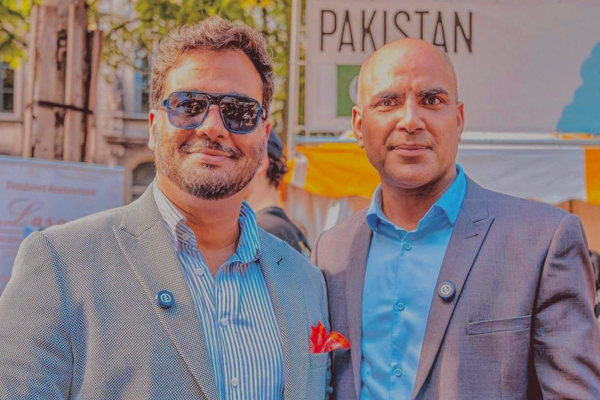
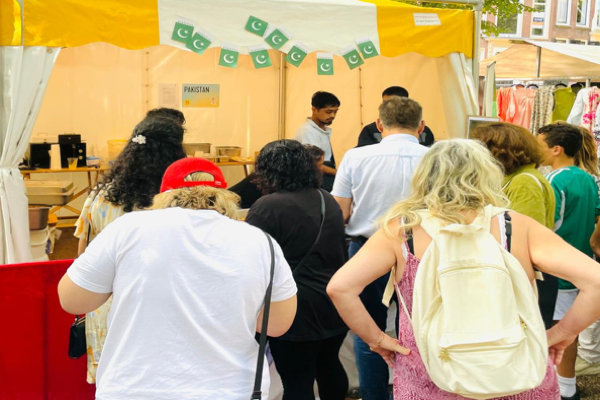
We are delighted to present an engaging interview led by Mr. Akmal Nazir, the Founder of Diplomat Link, with Mr. Muhammad Shafiq Haider Virk, who serves as the Trade and Investment Counsellor at the Embassy of the Islamic Republic of Pakistan in the Netherlands. This conversation, held during the Embassy Festival, allowed for a valuable discussion on various significant topics, perspectives, and insights. We invite you to enjoy the complete interview below and would love to hear your thoughts and feedback.
Q. Bilateral trade between Pakistan and the Netherlands has grown significantly. What steps are being taken to diversify trade beyond traditional sectors such as textiles and agricultural products?
Ans. The Netherlands already plays a crucial role as an economic partner for Pakistan, and there is ample opportunity to expand and deepen this relationship. Our bilateral ties now extend beyond traditional goods trade, increasingly encompassing services, technology, water management, logistics, sustainable agriculture, healthcare, climate-related solutions, and the digital economy.
Within the European Union, the Netherlands ranks as Pakistan's second-largest trading partner, with approximately 50 Dutch companies actively operating in the country. The Dutch representatives have shown steadfast interest in exploring opportunities in agriculture, IT, textiles, and other areas where Dutch expertise can make a significant contribution.
There is substantial potential to diversify Pakistani exports to the Netherlands and the broader European market. This includes processed and premium food products, pharmaceuticals and medical equipment, leather and sports goods, IT and business-process services, engineering products, creative industries, and sustainable goods.
Transforming traditional sectors is equally vital. For instance, textiles should not be seen merely as a conventional export sector. Collaborations with Dutch companies can aid Pakistani textile manufacturers in advancing towards circular textiles, recycling, sustainable production, ethical sourcing, and high-value products.
Q. Pakistan and the Netherlands have great potential for cooperation in sectors such as water management, information technology and climate-related innovations. Which areas do you see as having the greatest potential to increase Dutch investment in Pakistan?
Ans. I see particularly strong potential in several sectors: water, climate resilience, sustainable agriculture, renewable energy, digital technology, and logistics.
Water stands out as a natural area for deeper cooperation. Pakistan is grappling with significant challenges such as floods, water availability, irrigation efficiency, urban water management, and climate adaptation. Meanwhile, the Netherlands is renowned globally for its expertise in integrated water management. This creates a clear alignment between the needs of Pakistan and the Dutch expertise in knowledge and technology.
This potential is not just theoretical. In February 2026, Pakistan's Ministry of Water Resources and the IHE Delft Institute for Water Education took steps to enhance cooperation in water resource development and management. Discussions addressed challenges like climate impact, flood management, and sustainable water use.
In addition to water management, agri-tech and food systems present promising opportunities. Dutch proficiency in precision agriculture, greenhouse technology, horticulture, cold chain logistics, water-efficient farming, and food processing can enhance Pakistan's substantial agricultural sector.
The IT and digital economy are other areas ripe for collaboration. Pakistan boasts a large, youthful tech workforce, while the Netherlands provides access to European markets, technology networks, investors, and advanced digital ecosystems. Collaborative efforts in software, fintech, artificial intelligence, cybersecurity, e-commerce, and business process services could be highly beneficial for both sides.
Our focus is on fostering joint investment and crafting collaborative solutions. The goal is to build partnerships that generate employment, develop local skills, and create solutions that can be scaled to other markets.
Q. What initiatives do you believe could further promote Pakistani art, literature, and heritage among Dutch audiences?
Ans. Pakistan possesses a remarkable cultural heritage which highlights both our traditions and modern creative expression. There is immense potential in Pakistani visual arts, including miniature painting, photography, architecture, film, literature, music, calligraphy, crafts, and contemporary design. Dutch audiences have a keen appreciation for culture and show significant interest in topics such as heritage, migration, identity, sustainability, and cultural memory.
Pakistani diaspora in the Netherlands could play a pivotal role in bridging Pakistani heritage with contemporary Dutch society. There's noticeable evidence of growing institutional interest in heritage partnerships. For instance, Pakistan's Department of Archaeology and Museums has collaborated with the Netherlands on the Asian Bronze exhibition, which included showcasing Pakistani bronze artefacts.
Q. What role can Universities, Museums and Cultural institutions in both countries play in building stronger and more sustained cultural and educational exchanges?
Ans. Universities have the potential to play a transformative role by offering what diplomatic exchanges cannot always achieve: long-term institutional relationships and direct personal interactions. They could create more joint research programs, visiting professorships, student exchanges, and doctoral partnerships, particularly in areas where two nations have complementary strengths such as water management, climate science, agriculture, engineering, artificial intelligence, public health, archaeology, heritage conservation, and the humanities.
There are already successful models to build upon. Educational cooperation between the Netherlands and Pakistan has a rich history. The Netherlands' Clingendael Institute, for example, has trained over 150 Pakistani junior diplomats.
Q. Looking ahead over the next five years, what do you consider the most important achievements that Pakistan and the Netherlands should aim for in strengthening their trade and cultural relationship?
Ans. Over the next five years, I hope to see the relationship between Pakistan and the Netherlands grow broader, more balanced, and deeply rooted in people-to-people connections. Economically, our aim is for greater diversification in bilateral trade, with enhanced Pakistani exports in IT services, processed foods, pharmaceuticals, engineering, and other high-value products.
We would also like to see increased Dutch investment and joint ventures in sectors like water management, sustainable agriculture, climate adaptation, renewable energy, and digital technology in Pakistan. Establishing joint innovation projects can be transformative, fostering collaborations between Pakistani and Dutch companies and institutions to develop solutions for both markets and beyond.
Water cooperation, with support from IHE Delft, holds promise as a flagship collaboration area, addressing flood management, irrigation, urban water systems, and climate resilience. Culturally, the exchange could be enriched through regular Pakistani cultural events in the Netherlands and Dutch programs in Pakistan, backed by museums, universities, and artists.
Involving more young people through exchanges among students, researchers, entrepreneurs, and athletes will create enduring connections. It's crucial for the relationship to involve mutual learning: Pakistan can benefit from Dutch expertise in various areas, while the Netherlands can learn from Pakistan's entrepreneurial spirit and experiences with climate challenges.
Recent years have seen multiple delegations from Pakistan visiting the Netherlands and various events organized by the Pakistani embassy to bolster these exchanges.
Please leave your valuable feedback at info@diplomatlink.com
Thank you for your support and valuable feedback!